“…the idea that pain is always looking for somewhere to land is central to the book, and also part of Smith’s answer to the question of the purpose of art in end times. Her writing…is a place for pain to land.”
The above quote comes from Sarah Moss in this review .
This is perhaps the best assessment of Ali Smith’s work post How to Be Both. Though it may be the underlying purpose of all her writing.
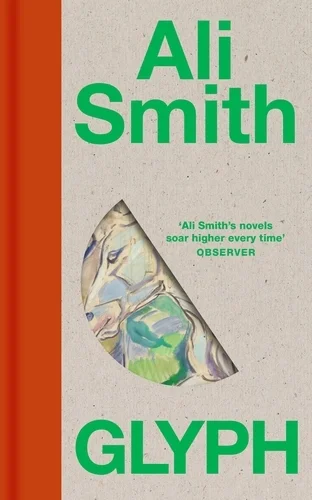
I read the bulk of Smith’s latest novel Glyph last night, because Smith, for all her play and experimenting, pens quite readable books. Even when punning (which she’s very fond of) and listing (no shortage of that in her recent work) and digging into etymologies and layering narratives, Smith crafts pleasing prose. There is, to my mind, no better evidence of her grace and play than in Hotel World, still my favorite of hers, likely never to be replaced. That was an early novel; what she’s been doing lately is not all that different from her past efforts, but where Hotel World is fractured into five overlapping narrations that maintain surprising tightness, the Seasonal Quartet (plus a companion novel because, fuck it, why not?) and the recent duology (Gliff and Glyph) make space for maybe not looser connections but certainly something baggier. The Accidental, Smith’s third novel, also changes narrators each chapter and stays, more or less, centered. How to Be Both is split in half, the order of the narratives switched depending on which (not quite) copy one holds.
None of this structural play is terribly new, at least not to readers familiar with Woolf or Faulkner, and none of these conceits overwhelm Smith’s storytelling. They enhance her craft rather than wag the dog. But reviews will inevitably focus on these elements, hopefully not at the expense of engaging with Smith’s concerns, namely: how to be a person in threatening times.
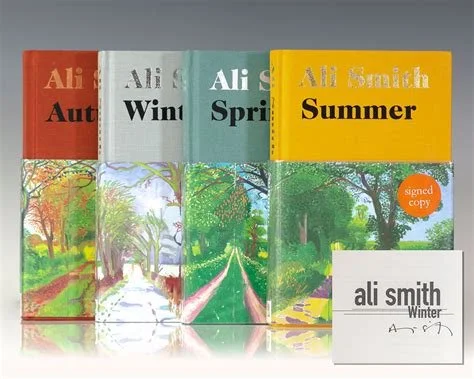
At least this seems to be Smith’s concern since she started the Seasonal Quartet. Those four (er, five) books were written and published within a year of each other and make direct reference to contemporary life. To be sure, Smith could not have imagined that Covid would be a part of her project, but as she mined contemporary concerns, the pandemic needed its novels (Summer and Companion Piece) topping off a project that started as Brexit was poisoning the air (Autumn) and examined the struggles of community and family (Winter), the very real detention of immigrants and the possibility of hope (Spring). Connection and loss run through each book reflecting our time of infinite possibility stalled by inertia. We are enslaved to technologies that promise liberation, in thrall to distractions marketed as innovations, and ruled by governments that speak of freedom while they brutalize those most vulnerable. Add a climate crisis and a pandemic to the mix and things seem pretty goddamn bleak. Yet each novel in the quartet offers joy, a word I have a hard time using, coopted, as it is, by algorithms and made the mantra of a generation I suspect has been made to expect endless dopamine. Smith is by no means a Good Vibes Only writer—she does not shy away from the reality, however dark, and yet her novels always feel rooted in the possibility that we could change things. We really could.
Maggie Smith’s (not the actress) poem “Good Bones” achieves the same end: confrontation of the bleakness of existence with the reminder that “you could make this place beautiful.” The two Smiths share this optimism. Though, looking closer, is the poem really optimistic? It posits the idea that one could make the world beautiful the way a realtor “walking you though a real shithole, chirps on / about good bones.” Smith the poet is trying to sell the world to her children who she is tasked with protecting and preparing. Not easy!
Smith the novelist is similarly examining the forces that make existence precarious, dangerous, dehumanizing, and delightful. I can’t always say I finish an Ali Smith book feeling ready to fight the power, not even after Spring, a book I assigned in a class called Power and Oppression. I wanted the students to see a story where the central horror, detention of migrants, was confronted with an absurd character, a girl who magically walks into a prison and asks the guards why they are doing what they do. This precocious young girl, named Florence, meets a guard, Brit (Smith is quite fond of on-the-nose character names) and convinces her to change her ways, which are not inherently cruel. Brit just needs a job. Florence dubs them “Florence and the machine” because Smith is having fun.
My students saw Florence as a stand in for Greta Thunberg. They understood the idea of a young person demanding that the world do a better job. And they saw what I was trying to do by making them read such a book. And they know that they could make the world beautiful. But they also need jobs.
How to square that circle? Every generation since well before mine has reckoned with the problem of knowing that the world is in trouble and needing to feed themselves and their families. We could do so much to curb climate change, but none of it will amount to anything the truly powerful corporations could do, so fuck it. YOLO. May as well get paid before the world burns. I can’t say I’m any better. I have worked for organizations that do things I do not love, things that have made me aware of my complicity in a system I despise. The real sin of capitalism against the individual is the forced participation that requires us to shelve our consciences in order to survive. And while we can, and sometimes do, fight back, our small resistance chips away at an imposing monolith. Are these actions enough?
Smith’s novels often make me believe in the importance of accumulative action. No, I won’t stop the war in Gaza myself, and her latest book, which directly comments on that (to use a disgusting euphemism) conflict, won’t stop it either. But reading about it in Glyph, through the mind of another precocious young person (Smith is not bothered by repeating tropes), made me feel that perhaps change is possible. Maybe the Zoomers might do something. And maybe their older cousins had an impact as well. As well us grumpy fifty-somethings and our Boomer parents. Generations love to reductively blame their elders for ruining the world and leaving the young with a mess to clean, but I can’t always lock in with that complaint. While not ill-founded, blaming the previous generations for the ills of the day ignores all the things none of us understand well enough to address. We’re oppressed and oppressor in often equal measure. I like to remind my students that they are 100% right to be angry with the Boomers and, sure, Gen X, but talk to me in thirty years. Tell me what the next generations are saying about yours. Try telling me they’re wrong. Your fight is not invalidated by whatever you’re doing that may make everything worse. Because we’re all trying our best. Well, most of us.
Smith trucks in this awareness of the struggle and the ease of disenchantment, the lure of getting by, the possibility of resistance, the beauty of community. I can’t figure out how a writer can both begin books the way Smith does in the Seasonal Quartet, with pages that exhaustively catalogue the ugliness of the day, and end with something close to hope. And yes, there are moments in her recent books that make me cringe slightly, a sort of flashing arrow pointing toward not always a happy outcome so much as the possibility that things might just be okay with this damned human race. I cringe, but I also smile.
Gliff and Glyph don’t offer the same experience, but they come damn close. And I may be alone here—reviews of both books speak to their healing optimism specifically evident in each novel’s plucky sisters. In Glyph, the estranged pair come back to each other, which is supposed to be big, though not much was done to establish their rift. Regardless, I got the message: bonds break but also heal. And if both novels rely on young girls imbued with wisdom and power beyond the scope of the average tween or teen, the effect is perhaps diminished the third (fourth?) time. But I was still up for the ride. Because Smith is a clever, fun writer who resists toxic positivity and leaves me feeling better than I felt before I read her. Me, a cranky dude who sees existence as absurd, the universe as chaotic, modern life as foolishly constructed, history as suspect, ambition as folly, leaders as rogues, and failure as inevitable. This sour fucker actually feels something akin to joy while reading Ali Smith. Not the visceral pleasures gotten from wallowing in grindcore metal violence or gallows humor. Not catharsis or solace, but actual joy.
A goddamn miracle.
