Revisiting Bukowski, a Sort of Defense

As the years pile up, I am happy that my curiosity remains intact, somewhat. I don’t feel the same compulsion to know about everything the way I once did—my old practice of scanning the Chicago Reader to see exactly which movies (plural!) I would see that coming weekend, the hours spent reading articles about important musicians, those afternoons in used bookshops happening upon my next obsession, those days are sorta over. I’ve found my canon, and while there’s space for new music and a new favorite film, I have collected my go-tos and will happily revisit them as my fifties fall well behind me and I’m off toward the grave.


A personal canon is a good thing. I have my favorite this and that, fifty-plus years of amassing the art that speaks to me, for me, against me. And though I’ve eased away from cultural omnivorism, there’s still hunger for more, even as I have far less interest in whatever the hell is going on now. I’m sure the new Wet Leg is great, but I’m just recently discovering Swell Maps.


As with the posts to this blog thing about the Red Hot Chili Peppers (which nets me messages from randos, most in agreement, some making facile remarks) and A Clockwork Orange,  I had it in mind today to revisit some of Charles Bukowski’s writing because there was a time when I read the guy. A long time ago. When I was young and that sort of thing appealed to me.


I don’t think of Hank much these days, but last week a student mentioned him in class, and I had a weird nostalgia for the time when I was reading Last Night of the Earth Poems and finishing the last cigarette (“one before I go to bed”) of the day and falling asleep thinking that a writer had to be, above all else, honest even if being honest meant being vulnerable and ugly. Risk, goddamnit!


I don’t know that I was wrong, but there a lot of ways to be honest and vulnerable that don’t require so much performative edginess. Which is not to say that Bukowski was faking his drunken asshole persona, but scores of lesser writers and bigger assholes have emulated Hank to significantly lesser effect.


The last thing I intend is an apology for reading the patron saint of drunken writers. Lit bros aplenty will pen their peans for Hank. This is more me thinking about why I have kept every one of his books (well, up to a point—the dude has more posthumous releases than Tupac) as opposed to many by Kerouac and Hunter Thompson I let go once their madcap scribblings struck me as juvenile. Thompson was the better craftsman, and Kerouac, for all his rambling, could land on something close to beautiful when his head cleared. Still, despite Bukowski’s prose sometimes clunking, and more than a few of his poems feeling unnecessary, his work remains compelling.


I might chalk it up to the man behind the poems/stories/novels. Not just the larger-than-life stuff, but the part of his biography that always inspired me. This was a man who rejected so much, who had zero time for the academic classroom, whose writing bore few marks of the editor’s scissors, and yet while he lacked Faulkner’s flourishes or Joyce’s maximalist glories, his simple, direct prose achieved something singular. Unlike his one-time hero Hemingway, Buk’s largely unadorned sentences feel natural, flowing, energetic. When he’s on, he’s really something—funny and heartbreaking despite the cheap bravado. But maybe because he earned the right to swagger, I don’t mind all the tough guy shit. Hemingway always read like a man in search of experience that would make him the legend he was in his head, whereas Bukowski didn’t chase wars or bullfights or deep-sea fishing. He chased solitude, self-destruction, the beauty that appears “as the / spirit / wanes.” Misanthropic, misogynist, malcontent, he definitely has his warts, many of which fueled his most interesting efforts.


Of course, the same bestial wails that continue drawing readers repel those looking for something like refinement. But he has that. Not in the sense of regality; Bukowski’s elegance comes from the simplicity of his ideas. He was at his best when he detailed the experience of the lowlife like an American Jeffrey Bernard without the British writer’s dry wit. The hardscrabble existence and skid row poetry that, when it was honest, offered complexities. But when Hank’s aim was profundity, when he really tried for something more than a slice of gritty life, he came off as another crank at the end of the bar who you were despite to pawn off on the next unlucky bastard bellying up.


A friend told me that she’d seen plenty of men whose dating profiles named Bukowski as their favorite writer. Automatic swipes left. I get it. Bukowski was a prick, albeit an interesting one, but the dudes who love him can be insufferable. Then again, I’ve heard women say that about Joyce fans, too. And one woman said she’ll never read Kurt Vonnegut because of the number of boys who have insisted she give Slaughterhouse Five a shot. Were I still a single man (perish the fucking thought!), I wonder which writer would send me away from a potential date. Nicholas Sparks? Colleen Hoover? No. Wait—Candace Bushnell. Maybe. I dunno… no woman has ever beset me with unending praise for their favorite writer, not because women don’t have favorite writers but because women don’t go on and fucking on about all the writers I NEED to read. I’ve learned more from women than men, yet no woman—aside from those employed as teachers—has ever tried to teach me anything.


Suffice it to state that Bukowski’s attitude toward women was rarely palatable. Part of his package. I don’t know anyone who goes to Hank for nuanced takes, but I will offer mild defense in the form of a few remembered poems and stories. At times, when he dropped the word “whore” from his lexicon, Buk could be a softy. His poems to his wife that speak of her adding years to his life, him pleading that when she takes herself away please do it slowly, his crying jags, tears running from his face like “heavy senseless things,” the stories where he communicates his madness and lets the reader see that all the posturing is actually covering up something so much worse than what’s on the page… I can’t help but find something in those highs that make me okay with the lows.


And there are lots of lows.

A few good texts stand out, mostly the novel Factotum and the poetry collections Mockingbird Wish Me Luck and War All the Time. A handful of stories have stuck with me— “The Blanket,” “Great Poets Die in Stinking Pots of Shit,” “The Birth, Life, and Death of an Underground Newspaper”— and the travel book Shakespeare Never Did This is an overlooked gem. But this list represents a drop in the Bukowski ocean. Among those waves are stories like “The Fuck Machine” and “All the Pussy We Want” that don’t do much more than send my eyes rolling. His story of nearly drinking himself to death and ending up in a charity ward remains high in my estimation, but for all those hits there are heaps of misses that a good editor would have caught. John Martin may have been a more hands-off editor or maybe he knew that unfiltered Bukowski was what kept the Black Sparrow flying. Or maybe what we have is the result of editing? In which case, what the fuck was left on the cutting room floor?


Bukowski’s many tales where women are little more than pieces of ass who lie and break his heart send me to a different shelf. I like to think I was never as big a prick. I have not always been a good guy or a great boyfriend, but I never absorbed Hank’s sexism so much I casually regurgitated it to some unfortunate female. Or maybe I did? Who remembers—but damn, I can certainly see the man I don’t want to be when I read his pages. Which is where this reevaluation gets sticky. Perhaps by reading these tales of ordinary madness and notes of a dirty old man I am afforded vicarious thrills, the voyeur’s permission to celebrate the worst on offer in Women or Love is a Dog From Hell. I can perform as an ally while letting this overt misogynist scratch some terrible itch I don’t want to touch.


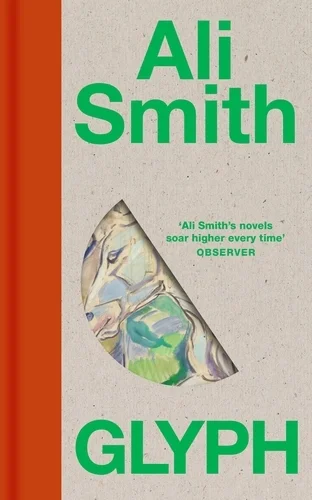
Even when I had my head somewhat up Bukowski’s ass, all those years back when I thought Tarantino made good movies, I never thought he was the equal of Faulkner or Eliot. I knew better then, and I know a lot better now. The marvels I’ve witnessed in Joyce’s novels, the hysterical tragicomedy in Beckett, Calvino’s fabulist wonders, not to mention the slew of women who are, on their worst days, better writers (Jeanette Winterson, Ali Smith, Virginia Woolf, Jessie Fauset, Ann Quinn), Buk can’t touch any of that. Had I one writer to bring with me to a deserted island… I don’t know who I would choose. But it would not be Bukowski. Yet… there they are, those books. They take up so much real estate, an entire shelf on one of my bookcases. Most of those books currently staring me in the face are not worth keeping. They are there really to remind me of the kid I was who insisted that reading every Bukowski book wouldn’t yield diminishing returns. What a dumb dumb.


I lent a copy of Women to my friend Kevin. His review: “I could’ve drank. I could’ve fucked. I drank.” Nailed it.


I have not given Bukowski much thought in these last, oh, thirty years. But I see him popping up often in my Instagram feed, pictures of the man somehow looking both bloated and desiccated, shirt buttoned well below the top, beer bottle in hand, some plucked quote over the photo and scores of dudes in the comments celebrating the guy. Fine. Most of their praise is defensible, though from a few lauds come whiffs of manosphere sulfur. Ironic since Buk would have had no time for their dumb causes and idiotic worldview.


The last defense, and the only one I really care about, comes from the novel Women wherein the Bukowski stand-in Henry Chinaski responds to a girlfriend who, while readying her departure from his wretched existence, insists that she’ll one day be a bigger name, that she has more talent than him. Chinaski replies something along the lines of every baby in every crib has more talent than him. The difference is, he does the work. Which is pretty much the best thing we can get from the Bukowski example. The drinking, screwing, gambling, fucking off, quitting jobs, living like a cockroach—all of that overly romanticized stuff is for young males. (Until they get older and realize how much they like money and comfort. Until they reach middle-age and read Walden and daydream about escaping to a cabin in the woods.) But the work ethic is most admirable. Bukoski hated talking about writing and writing workshops and all of that. He just opened a bottle of wine, turned on some classical music, and wrote. Every night. A routine. Imagine that coming from the man mythologized as a loafing reprobate souse.


Bukowski was right. He did not possess admirable talent, at least not as we so often think of it: the fevered genius with greatness beyond understanding who produces visionary works, whose every utterance is a psalm. No, Buk’s example is one that has always inspired me more than the Great Man bullshit. One need not be a genius, just dedicated. Willing to do the work. Sit down, write. As much as possible. As often as possible. Regularly. The words will come. The pages will grow. But if you wait around for divine inspiration, you’re fucked. I’ve written a few books following this example.

Until the Bubbles Cease

This year, I was not invited to represent English at my university’s Lifeboat Debate event. I had that honor the previous three spring semesters. Nothing lasts. Nothing should.


I am not offended. Honestly. I assume that the new crop of students who organize the event don’t know me. Or they don’t like me. Either is possible, but there’s a big dumb part of me that wants to believe I was not asked because of what I said last year.


Quick context: The Lifeboat Debate is a gathering of instructors and students who are tasked with defending their existence. The idea is that the world is flooding and there is only room on a lifeboat for three academic disciplines. Why should mine be invited onboard? Of what value is English?

Of course, the very question offends me to my core, though I realize that not everyone intuitively understands why they ought to practice writing and read a lot of books. Thus, my job. But my job has morphed from composition and literature instructor to detective, and I find myself reiterating the value of functional literacy to a population that increasingly sees no issue with exporting their skills to AI. So maybe the debate has more purpose than I thought?

I would not have won. I never do. At best, I get second or third prize. Last year, I came in second, which I attribute to reverse psychology. Which will make more sense when you read my speech.

My colleague who teaches Sustainability Studies always wins. Of course. The totality of his argument: Who likes eating food and drinking clean water?


I’ve never been competitive, but I will admit that one year I was compelled to fight for my discipline after another colleague resorted to pure pathos and misrepresented Henry David Thoreau’s story. Otherwise, I tend to let someone else take the gold. Forever steeped in punk rock ethos, I’m content staying niche. The real heads know.


And then last year I had a thought: English Comp and Lit should not be saved. I see where the world’s headed. There’s no place for me there.


Here’s the speech I gave as my introductory statement. While I cannot say that it is truly to blame, I, again, want to believe that it had an impact sufficient to deny my invitation to the very event where I would surely be denied hypothetical survival.


“We can forgive a man for making a useful thing as long as he does not admire it. The only excuse for making a useless thing is that one admires it intensely. All art is quite useless.”


That’s from an Oscar Wilde book I read as an English major.


I don’t 100% agree, but I understand the sentiment.


Literature and writing have utility, but that makes them much less interesting than the reasons I got into this absurd field of study. And while I respectfully thank you for having me, the idea of defending those reasons in this manner is antithetical to both how and why I’ve spent my life.


Reading, writing, literary study… these are labors of love. They have little value to most people, or at least so say the market, culture, and consumers who believe art is owed to them for free, constantly streaming and all-too disposable.


Let’s be honest: English study is a pain, what with its emphasis on care and reflection and the slipperiness of its most interesting theories. Worse, being an English major or literary-minded person means accepting uncertainty. And these days, no one is comfortable in uncertainty. Literature doesn’t pretend to know anything for sure (unless it’s rubbish posing as literature). What good is that?


Yes, there is “inspirational” literature, but more times than not, you literary-minded suckers will have your hearts broken, your optimism challenged, your ability to understand thwarted, your sense of correctness decimated. At best, you’ll be better prepared for how unprepared we are in this world.


Let me stress this: English doesn’t assure you anything. The language is built on contradictions, exceptions, irregularities, baffling possibility. And worst of all: you’ll never master it. None of us do. Of what use is this to the society you’re rebuilding? Well… plenty, actually, but I can’t pretend that use is quantifiable. And while, unlike some of my esteemed colleagues, I would never assume my discipline’s value is self-evident, I don’t care to beg for shelter in this STEM storm.


So, if my survival is contingent on somehow justifying my chosen discipline’s utility, you should force my face into the cold water until the bubbles cease.


Thank you.

Too Much Joy

 Last week, I had the pleasure (note that word—it will come up again) of reading from my latest book to a group of people gathered at a literary event. I do this from time-to-time because it allegedly helps sell books, though the true purpose behind these gatherings is promoting literature, sharing creativity, engaging with other writers and literary citizens, and honoring the oral tradition of literature, especially poetry.


As much as I can be accused of cynicism and having a “caustic wit” (as said by a former manager at my first office gig before I knew to keep my mouth shut), I do believe in the true idea behind literary gatherings, as described above. Because I’ve never sold many books at any of these events. Not enough, at least, to justify leaving the comfort of my apartment. In this way, I might be called, if not an optimist, an idealist.


At this reading, I shared a bit from my book that I think went over well. A few chuckles and some nice words after, always appreciated. One friend said about the passage I shared, “Acerbic as always.” Another person, who enjoyed the spectacle enough to buy a book, asked if I’ve always been this way. I assume they meant bitter.


I suspect people might describe me as a relatively amiable fellow. Sarcastic and fatalistic, sure, but happy to be among good friends, smiling as much as scowling, if not more. In short: I feel I project a mostly sunny vibe. But if you read my stuff, you’d probably disagree.


At times, I am a bitter, disappointed, frustrated, angry, disillusioned, disaffected, snarky bastard given to the darkest humor and seemingly nihilistic philosophies. “Seemingly” because nihilism is a lazy accusation. I am not nihilistic. Nihilism is easy. And kinda dumb. Existentialism is more the meat. And absurdism even closer to what I might claim as a governing worldview. Because an absurdist does not cover up the horrors of existence with platitudes, positive or negative. They see the struggle, the meaninglessness, and they fight anyway. Anyone can give up. Where’s the fun in that?


If there’s an aspect of modern life, specifically in the U. S. of A., that I don’t love, it’s the imperative to enjoy. Zizek pointed out the way Americans feel an obligation to be happy. It’s baked into our advertisements, pop music, and “Live your best life” T-shirt slogans. It’s not just a desire for joy, thoroughly understandable; it’s the necessity for it. Not being joyous in the land of the free global center for first world capitalist material pleasures is an admission of failure, a glaring fault. Growing up, I heard people wonder, “Who can’t be happy with all of this?” Because the “good life” was not a goal but an edict.


ISLES, that wonderful band from the UK, have a record called Joy as an Act of Resistance. While the record is great, the title conveys something I rather like: that which is being resisted by joy requires some consideration. I mean, you can’t resist without acknowledgement. Joy is not simply the denial of horror so much as the rebellion against it, the refusal to let it completely consume us. And one can find joy in resistance and fight, maybe better joy than escapist pleasure affords.


To be sure, most people can both experience joy and keep an eye on the creeping nightmare, but I suspect we’ve been made to feel that talking about, feeling, or processing anything other than joy is bad bad bad


I have more than a few friends who wring joy from aesthetic pursuits, alcohol and drugs, or “retail therapy.” (I do the same, for the record, so don’t @ me, ideal and possibly nonexistent reader.) I know avowed sensualists, Wildean aesthetes, bone marrow and truffle fry fine diners, collectors of rarities, fashion designer zealots, and others who may bemoan capitalism as quickly as they apply its balm. I do my version of this—I buy more than I need. I know the temporary joy or exchanging money for shiny things. I like my single malts and pretty books, even the ones I may never read. I prefer clothes that are as attractive as they are comfortable and will shell out sums that once would have sickened me just so I can have another flat cap or handsome jacket. But I know that none of this equals meaningful action. To quote Marc Maron, I’m just buffering disappointment.


Pleasure is the thing. We find temporary pleasure in the promise of capitalist joy. We see anything impeding pleasure as wrong, an obstacle that must not be scaled so much as obliterated. Much has been made of the need for friction, so much that I don’t need to get too deep into all that. I can say that the lure of technology and the looming AI “revolution” will be a world without friction where we can enjoy unobstructed pleasure.


Call me (again) cynical, but I don’t buy it. What world will we create that is considerably better? What world have we created already? What frictions are left that are so terrible? Obviously, plenty, and my questions betray plenty of privilege, but forgetting for a minute the vast societies that still want for clean water and the basic infrastructure of the developed world, what more does, say, the USA need? Obviously a lot, most pertaining to socio-political matters, none of which will be addressed by new gadgets. I suppose as the disparities deepen and the middle class vanishes and literacy evaporates and democracy fully crumbles, we’ll have better CGI in our movies and faster delivery from Uber Eats. Pleasures fast and base!


The place where I find the worst examples of human behavior, mine definitely included, is social media. I am the worst version of myself when I’m on Facebook. I’m a slightly better version of Vince on Instagram, as that is mostly the Vince who posts photos and enjoys self-absorption without a lot of words making things worse. My friends on social media fall neatly into one these groups: those who wish to “keep it light” and often strike me as playing on while the Titanic sinks, those who rage against the machine and exhaust themselves exercising futile muscles, and those who just want to pick fights and talk shit. The first group bugs me the most. I get the tendency of the second—they’re pissed and they need an outlet, however unhealthy. The third are also looking for an outlet, through their indignation is considerably less righteous. The first… what are they (we) doing sharing evidence of our best lives and our lovely dinners and our gaudy baubles? I’m as delusional, distracted, and dopamine addicted as the next fucker, sure, but I often suspect the next fucker thinks their solace in pleasure is somehow noble. At least they’re not sharing articles about whatever the hell Trump did this week or yelling at people for using socially outdated language. No, they’re (we’re) just feeding data to machines, making Zuckerberg richer, and furthering a truly dumb culture.


But it’s fun!


Another criticism leveled my way: pessimism. Okay, fine. A little. But I’ve always found that optimism and privilege go hand-in-hand. And, really, I’m not a total pessimist. Just a frustrated romantic. Now that I’m thinking of it, perhaps the reason these labels sting a bit is because they’re supposed to. Joyful optimism is enviable elevation of oneself above the world-weary. It suggests superiority, thus the barbs of “pessimist” and “cynic.” But this may be another reason why I sometimes find positivity toxic. There’s an ugly condescension in there along with the before-mentioned social advantage. It’s easy to be an optimist. There have never before been so many distractions from that which might engender pessimism. And while I can’t advise succumbing to total pessimism, a dash of jaded realism goes a long way, especially when mixed with hope. Hope is far more nourishing than optimism and joy. Transient by nature, joy needs constant chasing. It’s too fleeting to ever be sustainable or world changing.


None of these abstractions are mutually exclusive. I suspect we are all perpetually wavering between hope and despair. It’s understandable that we’d want to push away the dark via whatever device, content, cloying pop song, or delicious poison we find. I’m just trying to find balance. Best we can do, right? (How pessimistic.)

Fuck AI

Last week I had the supreme displeasure of both encountering the AI generated video of Donald Trump playing “Don’t Stop Believing” and realizing that I watched the entire dam thing. However much I dislike the looky-loos gawking at car accidents on the road, I just couldn’t look away at this metaphorical three-car pile-up.


There may be no more perfect song for Trump, or his digital minions, to have chosen. “Don’t Stop Believing” is not the worst song, but I’ve grown to hate it not because Trump “ruined it,” as one friend said in response to the video, but because the song was overplayed well before the White Sox snagged it during their World Series run. The song has long struck me a lab experiment by scientists tasked with making something perfectly anthemic. Maybe it’s just cranky ol’ me again weighing in on something popular, but while I try not to be purposefully contrarian, most of Journey’s music, in my estimation, is as meretricious as Quentin Tarantino’s films.


All that stated, why wouldn’t Trump use this song? It has an immediate appeal that grates upon re-listen. It’s unquestionably embraced by the youngest Boomers and oldest Gen Xers who remember a time when “Music kicked ass, man!”  It’s as catchy as herpes. It boasts some weird Americana quality of small-town girls from the Midwest and dudes taking midnight trains without regard for their destination, a classic ramblin’ man hobo myth that Bob Dylan rode to success. A million overfed CEOs think they too are bred of similar scrappy stock. In short: the song is bullshit. But bullshit can be fun.


A Jim Jefferies’ comedy bit from 2016 comes to mind. In regard to Trump, he said (before discussing what an idiot Trump is and how stupid anyone would be to believe a word he says, much less vote for him): “He’s a lot of fun.” Which I’ve long realized is the appeal—Trump, like Journey, offers some easily digestible good times. Be it a color-by-numbers rock-and-roll sing along or a speech full of grievance and bluster, asses will fill seats and arms will hoist lighters to the sky.


Rather than go deeper on Trump than I care too, I’m going to turn toward the real subject of this blogpost thing: AI. Because, like Trump, AI steals more of my attention than I would like, but this is the world I live in, hoo hum.


AI has already been imbued with importance by the same assholes who promised us that the web would be a democratizing, liberating force for good, promises born of short-sightedness or deceit, I’m not sure. It has also been met with dire warnings and dooming predications penned by journalists, scholars, and media figures who rightly worry that this emerging technology might send them further into obsolescence. Most folks, from what I gather, reside in the fat middle, the place where soft skeptics can say, “Well, there’s probably some good it’ll do, but we’d better be careful” and the average internet user will either smile or shrug at the marvels of this brave new world.


I reside in the “fuck AI” camp, at least as far as art, media, politics, and education are concerned. I make that last qualification because I’m sure there are AI applications that could redound to some benefits, specifically in medicine and engineering (though I hope that scientists, doctors, and engineers retain some authority and and not outsource all their expertise to the robots). I admit my bias—I teach English, mostly composition, and thus AI has turned me from an instructor to a detective. When tasked with actually writing an essay, the temptation to use large language models is too great. Some of my students have succumbed, which has only generated mediocre, at best, work and a few awkward conversations.


My English department has discussed the issue of AI cheating at some length, the result being that we should do a better job explaining why people should work on their composition skills. We too often assume that ideas we think important—creation, critical thinking, exploration, play, revision, rhetorical attention, diction, tone, and voice—are self-evident. We’re kinda dumb that way.


A result of not using AI to write this blogpost: my wrists are sore because I cannot type properly. My morning has disappeared. I’ve doubted at least seven of the above verb and adjective choices—never mind the adverbs. I’ve meandered a bit, haven’t I? And used more than a few words Grammarly would advise changing. But I have a better understanding of my feelings about AI than I did when I started, or at least I have the words to begin describing my feelings. The feelings were in me, painfully turning to thoughts in my head, fuzzy though they were. By forcing those thoughts to life through imperfect representation, i.e. by assigning specific words as stand-ins for the thoughts, I have done what people have done since time began: expressed myself as best I could via an imperfect system called “language.” Joan Didion made that famous statement about writing to discover what she thought, which is sorta what I’m preaching. And while I’m sure ChatGPT can be of some assistance with this task, I am doubly certain that something crucial is lost by relying on AI’s help with anything other than the polishing of writing. (More on that in a bit.)


Kurt Vonnegut made a statement in the 90s that has always stuck with me. When asked by some tech rag—Wired, I believe—about the Internet, he said he preferred The Encyclopedia Britannica and good old printed matter, as (and this is me paraphrasing), through downloads and software, humans have been robbed of the process of discovering. Vonnegut remains a hero, but even while reading this bit from him I knew that, while I was sure he was right, the sentiment had an old man quality to it. And people seem keen to dismiss anything coming from an old person’s mouth, regardless of value. The new is always given more shine.


Uncle Kurt may have had a point. The immediacy of information technology has altered us in ways we might not care about, but still… I do worry that GPS has atrophied mental muscles that once allowed me to navigate my way out of being lost. I used to fairly easily figure out which way to go. Now I rely on my phone to tell me when to turn right or left. Okay, I don’t miss scrutinizing maps or wandering into the unfamiliar, but what have I lost by relying on this tech? The process of discovering, as KV stated? I can only imagine more of this loss when AI goes from novel to banal.


While the internet has been (to put it lightly) a mixed blessing, and while my Gen X brain wants to opine that things were better before this technology’s ubiquity, I don’t want to go back to an allegedly “better time.” There’s never really been such a thing. Anyone who thinks there was is as equally deluded as those who uncritically embrace change.


But… I really don’t look forward to AI’s development, implementation, and inevitable corruption. We’re already accepted that this alien is here, that it is inevitable, and ceded our agency to the artificial, which feels pretty goddamn close to giving up. Talk of regulating it, on the rare occasions there is any, is feckless. Trump’s stupidly titled Big Beautiful Bill Act (bill act? did he never watch Schoolhouse Rock?) includes language that would ban states from regulating AI. Tech zealots scoff at any mention of checking their power, tricking the world into thinking their growth is of paramount importance and saying things like, “It’s either us or China!” These are the same people who dismiss college education, though if they had stuck it out in higher ed they may have taken a few humanities classes and studied basic logical fallacies, “either/or” frameworks being among the most elementary.  


I can’t see this working out well, but that may be due to my baseline gloomy worldview. Gen Z students tell me I’m too pessimistic. Ditto the Boomers. Maybe my absurdist despair is generational, but I have yet to see the net benefits of introducing something as world-altering as AI into daily life. I know, I know… it’s a tool, and tools are not to blame. Still, tools, as Marshall McLuhan and Neil Postman argued, have biases that move us more than we think. To a man with a hammer, everything looks like a nail. An old adage that Postman used to illustrate how tools alter us, even subtly, moving from this maxim to ask what the computer person values. To a man with a computer, everything is data, he more or less stated. To a kid with a smartphone, everything is an image worthy of Instagram. To a society filled with AI deep fakes, every news item is an opportunity for suspicion. Every action not entirely organic is marred by doubt. A person overly online, subject to algorithms created to maximize engagement and outrage, has every bias confirmed. Sure, we’ve always been prejudicial and willfully ignorant, given to conspiratorial thinking and panic. Tech hasn’t created any of that, but what good can come from unregulated AI that only amplifies our worst tendencies? That would be the same as giving the worst person you know unlimited cocaine.


Okay, sure, I’ll have a whole new system to get pizza delivered and endless hours of incredibly shop-worn content. Yippee?


On the subject of polishing writing through AI, I’m of two minds. On the one hand, I use spell/grammar check like anyone else. I also look up some words and right click the fuck out of others in search of more precise synonyms. The autocorrect fixes are not always unwelcome. These are some very basic forms of AI, right? Okay, but the more sophisticated tools— Grammarly, ChatGPT, and their ilk— seem set to corporate. The tone they recommend is very often one that flattens language. Even the LLMs, which can be instructed to “write” in different voices, default too often to the dullest English. What else would one expect from scrapping the entire internet for examples of how humans put words together? Well… I’d actually expect something more dynamic, considering the vastness of texts online, not to mention the entirety of canonized work in the public domain and the countless poems from past and present housed by Poetry Foundation, just to name one resource. And while I’m sure someone could show me a more interesting, fresh, exciting composition penned (sorta) by Gemini or some other LLM, my concern is that surrendering to AI writing tools will deaden language, or at least further the fallacious belief in one “correct” English standard. There have already been studies on how AI discriminates against dialects, a sort of codified indictment against any culture not white and upper middle-class or above. And while this very blogpost you’re reading (as if!) is riddled with rhetorical idiosyncrasies that may deter readers not down with my unique voice, I kinda don’t care. I know my audience. It’s tiny enough where I can relish in writing the way I want, which betrays my interests, tendencies, and stylistic concerns. I’ve long stumped for style over plot in literature and more rumination in nonfiction. I’m no enemy of the polished and audience-tested, which has its place depending on task, but to insist that all writing resemble an office memo in tone, to rail against anything that dares not be “tight,” is to argue for uniformity. And that offends my aging punk ass.


On Certainty

1


The day when I’ll know enough to feel “informed” or “wise” or simply “aware” will never come. That I’ll never be anything more than unsure is one thing I am sure of. That and that it’s okay to end a sentence with a preposition.


Balancing ongoing uncertainty with an often-regrettable tendency to speak my mind proves difficult. In order to opine with anything resembling authority, I attempt silencing the part of my head that reminds me how little I know for certain. And I fail a lot of the time, though when I do utter something one might receive as a thought based in certainty, the falsity of that confidence offends even me. I can only hear pumped up bluster masking doubt. Which is why I’m suspicious of all who seem certain.


2


Admission at the start:


I am likely full of shit. About most things and definitely about politics, which I am especially given to debating with friends and strangers in the most loathsome of spaces: social media. That stated, I continue engaging in conversations that will do little, if anything, to further the conversation or achieve any tangible result. I work for a university, so you’ll understand that ineffectual discourse and navel gazing are my métier.


If I find a life raft in this honest confession, well, it’s rickety. Nevertheless, I’m comfortable riding these rocky waves of uncertainty.


3


Yesterday I reminded my literature class that it’s okay to not understand the book we were discussing, Flann O’Brien’s The Third Policeman. Aside from being (in one student’s assessment) a “weird” book, the novel is somewhat of a mystery. Or not. I’m probably being lazy by dismissing any meaning or authorial intent, but I also don’t care.


There are plenty of ways I read The Third Policeman offering plenty of ideas and opportunities for conversation. Which is all I asked of my students, that they think about the book and speak about it with me and with each other. They were up for the task, even if a few admitted that they disliked the book. (No one’s perfect.) The most common interpretation, that O’Brien’s novel is about a terrible person who commits murder and is damned, fits well enough, though judging characters as good or bad feels a bit facile to me. Sure, the narrator of The Third Policeman is, as his author described him, “a heel and a killer,” and we can condemn his actions accordingly, but… what else ya got?


The book, in my estimation, is an answer to the 19th century tales where the criminals find salvation through repentance, a sort of updating of Crime and Punishment, although—this book coming at the end of the Modernist era—our narrator does not come to Jesus, so to speak. His confession, which occurs at the very start, isn’t born of regret. It’s all so matter-of-fact. I killed a guy. Ho hum.


Flann O’Brien’s novel being evidence of the 20th century pendulum swinging away from Victorian moralizing is, of course, just one quite possibly flawed interpretation, but, as I always say, that’s my theory and I’m sticking to it.


My students took notes while I made this point about The Third Policeman, though I immediately reminded them that this was just me thinking aloud along with them and not a verifiable truth about the intention of the novel. Then I reminded them that the classroom is a place for testing shaky interpretations and impressions. Their midterm papers, I said, demand more supported claims, but the classroom can (should?) be a space for trotting out ideas that may not have wings. Through articulation of those unsettled ideas (as if there are any other kind), we reach a place where we have a dash more assurance. We try out things in the discussion that we might then buttress with some academic research, which, in this literary game, is itself debatable.


I always liked literary study and the arts in general for this reason: uncertainty. That The Third Policeman is a great or important novel, one that is chock full of interpretative possibilities… of all this I am certain. But while I do have the power to inflict it on students, I can’t force anyone to adopt my certainty. You might think it’s a piece of shit. Bully for you.


4


The need to be sure is a bummer. It stops my students from raising their hands. I want to blame social media. My Gen Z students, those digital natives, grew up with gadgets and have seen what happens to someone making a claim online that turned out to be if not false, well, dubious. People get piled on, @ed, harassed, bullied, shamed, all that shit. Or maybe just a little mocked. None of that feels great. Why risk saying or tweeting or venturing any guess or stating any opinion in such a culture?


But a classroom is a place where we should feel comfortable proffering opinions. If we all agree that we’re there to share perspectives and mutually inform, and if we all remain respectful, then that grand dialectic bears fruit.


The above paragraph is evidence that I am not, as I am so often judged, completely cynical.


5


Every generation feared raising their hand in class, right? My Gen Z theory has more holes than Swiss cheese.


6


After we wrapped discussion on The Third Policeman, I had my students watch After Hours. To me, these works make sense together; After Hours features a guy who, while not a murderer, makes some poor choices throughout his evening in 1980s lower Manhattan. And like The Third Policeman, it has an other-worldly feel, though considerably less surreal. And there are themes of inescapability and damnation, cyclical structure, and repeating motifs.


Slightly irksome: my students felt the need to judge the protagonist of After Hours. Paul, our hero of sorts, doesn’t read Marcy’s signals well, tries repeatedly to have sex with her, abandons her when he finally gets the picture, loses his temper, ignores people… in other words, he’s not a 100% good person. Kind of like every person ever.


Maybe, I told my students, I judge him less harshly for not immediately dropping his sexual overtures because the film was made in the mid-1980s alongside far more rape-filled cinematic larks like Revenge of the Nerds and Sixteen Candles. Compared to those depictions of criminal sexual assault, Paul from After Hours is a saint. A rationalization of bad behavior… sure. But I can watch the film and feel grand whereas I can’t go back to the 80s comedies with their “Ain’t rape is funny” gags.


My students understood my point, I think. But they were certain in their assessment of Paul as a terrible person deserving punishment. They are more interested in analyzing characters from a very simple and frankly dull “good/bad” framework. And here I thought we were past simple binaries. 


7


Today, while making quesadillas, I flipped the tortillas as I always do: by hand. A spatula makes the operation safer, but quién es mas macho? YO SOY! That stated, I accidently placed my finger on the comal a second too long. That hurt.


If I place my hand on a hot stove, I’ll be burned. On this, and maybe this alone, I can express certainty.  


8


Remember this nugget from Ben Franklin: “In this world nothing can be said to be certain, except death and taxes.”


The statement is only half true. Just ask Jeff Bezos.


Also, I was pretty certain that writers should avoid “to be” verb phrases whenever possible. A teacher in grad school drummed that into my head. But the above quote not only has a “to be” in it, the “nothing can be said” is kind of clunky. So much for the great founding fathers.


9


Things of which I am certain:


10


The worst, grossest certainly is found, of course, online, Facebook being ground zero for certainty. Recently, Mark Zuckerberg lessened content moderation across Meta and boasted about the company returning to its free speech roots. Born in his dorm when he drunkenly objectified Harvard girls, Facebook morphed into a democracy breaking machine that also helped spread misinformation resulting in a literal genocide in Myanmar. So, yeah… Zuck’s not wrong about the company’s roots.


As alluded to earlier, I am the worst version of myself when I fight with people on Facebook. I write things that are redolent of certainty, even if I try to qualify statements. The replies to the stupid things I add to stupid “conversations” are even more certain. At least I try to add words like “seem” and “perhaps.” But my cyber interlocutors drip with certainty. They know for goddamn sure that they are right, their opinions and cheerful dismissal of anything that contradicts their politics are iron fucking clad. How can they be wrong? They know what they know. Things were better before. Simpler in 1984. 1974. 1954. Back before they were asked to revise a minuscule percentage of their lexicon or think of the experiences of humans unlike themselves.


In these stupid spaces, I act horribly, possessed by the certainty of my opinions and politics.


11


I like mystery. I accept it. I don’t know if there’s a god. I suspect not. If there is, that god is indifferent at best. I lean atheist, but I just don’t know. And I don’t care. The universe is likely empty and meaningless and random and pure fucking chaos. Fine. So be it.


What used to attract me to Existentialism—the little of it I understand—is the freedom it offers. No god equals no meaning to life other that which the individual assigns it. So, for me, the meaning of life is some jumble of art, a good cup of tea, single malt Scotch, my dog on my lap, the relationship I’ve built with my wife, the ongoing joy of laughing at the absurd. And writing a thing or two now and then.


If I can claim a philosophy, it’s Absurdism, which is like Existentialism only with better jokes. Speaking of philosophies, the garments of Agnosticism fit better than those of the believer or the atheist, as agnostics humble themselves by confessing that they can never prove or disprove god’s existence. And most of us absurdist agnostics are happy not knowing. We’ll learn the truth soon enough.


Monk's Memories

When Memories of the Year 2000 arrived in my hands, I was surprised by the size. As a sometimes ambitious reader, a tome is often a welcome thing, even if your average Miss Macintosh, My Darling is an exciting object that I’m slow to get through (assuming I’ll ever finish that book). But Bathsheba Monk’s novel (for lack of a better word) is an art-sized book just shy of 200 pages. In those pages are cut-and-paste text that formally imitates the everything-but-the-kitchen-sink narrative. Come to think of it, the metaphorical kitchen sink is in there as well, strewn somewhere along a collection of black and white sketches, ads, art, photos, quasi-propaganda posters, and hand-written asides assembled like a yearbook from the hilariously strange school you can’t forget attending, however much you wish you could.


This school has a teacher. A professor, actually, the narrator, a history prof conscribed (sorta— money is hard to refuse) by titans of industry Bill Gates and Michael Eisner to tell their story so that… you know what—it’s better you read the thing yourself. And the plot is tight despite a helluva lotta surrealist detours that make sense to anyone who’s ever read cyberpunk novels that only slightly distort reality in their funhouse mirrors. I could mention the shape-shifting characters that morph along with the bendy narrative, but, again, it’s better you read the thing. Suffice it to state that we have a Pegasus, an alligator (complete with Jonah-like plot turn), the before-mentioned Gates and Eisner as well as Jerry Goddamn Springer and (guess who!) God himself. Most of these figures are self-serving— apt as the 20th century had just ended and the brave dumb world was before us. I can’t think of a better time to look back toward to measure all we’ve done, all that’s been wrought, all that’s coming. This might be a mess without the damn fine writing that moors the reader, much needed in this casually madcap tale. Memories’ balance requires control. A lot of it. Comparisons to stylistically daring masters like Lucy Ellmann and Kathy Acker abound, though Monk asserts herself with caustic, smart prose skewering a not so long ago era—a mere 25 years ago!—the culture of which seems damn quaint in comparison to the absurdity of today. We see seeds in this book that have long sprouted and, sadly, have much life ahead of them.


Yet, there’s something like catharsis in this book. Maybe in the humor, which is sharp. Maybe in the play, which is invigorating. And if in the end there is a message from the Almighty, unlike Douglas Adam’s Hitchhiker’s books wherein we see God’s final message to us in form of the ultimate dry joke, Monk’s divine missive is a paean to spontaneity, creativity— to humanity, really. In times as bleak as these, I’ll happily take it.

On My Worst Tendencies

Today while driving down Touhy, in no rush to get to the Edens expressway, I nearly killed a young woman. I almost wrote “girl” but the person in question occupied the nebulous space between child/adult where one is never quite comfortable calling them “man” or “woman,” at least not without the qualifying “young” preceding.


Forgive the semantic quibbling. Start again, less charitably.


Today while driving down Touhy, in no rush to get to the Edens expressway, I nearly killed a stupid person. Well… that’s not fair. One may act stupidly in the moment, but should that one stupid act blanket their entire existence to the extent that stupid is used not as an adjective but a noun?


This is all my attempt at mitigating my terrible instinct to judge, to get riled, pissed, superior, indignant, to make sweeping claims I can’t defend but nevertheless feel. Feelings, as we in the humanities state repeatedly, don’t make an argument, but fuck it. This is a blog post, not an ENG 102 paper.


Perhaps I should detail the events so that any fears that I nearly committed pre-meditated murder are allayed.


I was driving west on Touhy— a busy street with four lanes of east-west traffic— when a young woman (old enough to know better) decided that she’d sooner run through traffic than wait for a chance to safely jaywalk. And I do mean jaywalk, as there was no crosswalk. Were there one, I’d be at fault for not slowing down and yielding the right of way to the pedestrian. And I might have even done that had she been standing on the curb as I approached, but the young woman in question arrived at Touhy abruptly and simply decided that she wasn’t in the mood to slow down. Or so I assume. What else could have caused a sensible person to think Fuck it and walk into traffic? Consider again those four lanes and you may picture, correctly, two lanes of cars speeding west and two lanes of cars speeding east. Also consider that the speed limit is somewhere in the low 40s, ensuring that we were all doing closer to 45, 50, and— in the case of the guy who passed me minutes before the near murder— 60.


The young woman walked across Touhy while wearing a big, dumb smile. What was behind it? Joyful contempt for the assholes who had to slow down and accommodate her addiction to immediacy? Fear manifesting as nervous laughter? Blissful idiocy?


It’s the smile that’s pissing me off. Brazen disregard for one’s safety and the safety of others is infuriating, sure, but smiling the entire time? Ugh.


(For the record, I have jaywalked a lot in my time. I’m a longtime Chicagoan and have no problem disobeying traffic signals, but I do it when no car could possibly hit me and no driver could possibly have their reflexes tested. There’s an art to safely jaywalking.)


There was no murder. (Note: I should use the words “accident” or “vehicular manslaughter” but murder, even in this scenario being without forethought, seems sufficiently extreme. Forgive the lack of euphemism and let’s just get on with things.) I honked then swerved, not the best order for those actions, but the jaywalker was unharmed. As she passed my lane, barely avoiding impact with my car, she proceeded to the next, causing the vehicle next to me to swerve into my lane long enough to share it with me but, thankfully, not collide. I don’t know what happened to the jaywalker next, but I heard a succession of car horns, so I’ll guess she made it across Touhy with her foolish brains still in her skull and not splattered across the road.


Here’s why this is really upsetting me: It’s December 30th. I have this hope every December that I’ll be better next year. Be a better person. Definitely be a better teacher. Husband. Citizen. I don’t think in terms of resolutions, but a year ending is a good time to take stock and figure out who the fuck you’d like to be as the calendar changes. And this year has seen me fall short of that ideal person. Next year will as well, but I can try, goddamnit, even when the inevitable stupity and annoyance confront me. I can try not to act equally stupid and annoying. I’ll fail again, but such is the way of the human being.


My inclination as I move closer to my mid-50s is to shake my fist at a cloud, proverbially. Which is why, once the adrenaline waned and my heart relaxed, I reached the not-at-all-informed conclusion that this young woman did what she did because of social media and the internet. Of course. Because why wouldn’t a middle-aged man assume that the problem is that these kids today are too blah blah blah what with their yadda yaddas and whateverthefucks.


BUT…


I do believe that the instant access of Amazon Prime, Instagram, and Door Dash has made us— young and old alike— less patient. We expect what we want when we want it. Likely always been the case, but we have faster tools to make that expectation reality. So is it so crazy to assume that someone who is clearly a digital native has a part of her brain ill-wired so they can only feel screaming agony when having to wait a goddamn minute for traffic to clear? Why should she have to? Doesn’t the world always move at the pace of her desires? Click here, get this. Scroll and see. Download dopamine. Get any food imaginable delivered asafuckingp. Didn’t love those tacos? Order sushi. You deserve it. You deserve to have your every fleeting whim catered to, even if that catering leaves you unsatisfied, as will the next in a series of diminishing returns.


Okay, I’ll stop the anti-tech “Get off my lawn!” rant. And though I pretty much agree with a lot of the above, I know that I cannot make the connection between our tech-saturated culture of immediacy and the jaywalker’s jaywalking. And I also acknowledge that we have always been a stupid species given to stupid fulfilling of stupid desires much to our own peril, so I will accept the criticism that I, like many middle-aged and elderly cranks, am unfairly maligning the generations below me. But that hardly means that these tools of immediacy are not stoking our worst fires and causing at least as much harm as good. (Convenience may be the better word, though the conflating of “good” and “convenient” is troubling.)


If the coming year threatens to be a doozy, I can at least try not to let it exacerbate my worst tendencies. I am looking at another fucking Trump presidency, one that could easily be worse than the last considering the lessons Donnie learned from his last time cosplaying politician seem to be not to appoint anyone to his cabinet that will tell him no. Without being in office, the prick has managed to tank another bipartisan bill, the last being on the immigration issue he pretends to give a fuck about and the latest being a resolution to keep the government open. And this recent destroying of what was otherwise a pretty good example of across the aisle compromise was spurred less by his ideals than by his ego, as Elon fucking Musk tweeted against the CR and Trump, not to be outdone, parroted the complaint. The prospect of Trump again in power is disheartening enough, but Musk? Fucking hell, someone save us from the oligarchs already.


And then there’s this fucking kid Luigi who killed a CEO and quickly became a Tiger Beat sweetheart to throngs of “burn it down” nihilists. Gen Z is apparently in favor of an extra-judicial murder, which makes me not any more positive about the looming 2025. (Side note: there are many who have discussed Luigi Mangione’s good looks. I suppose he’s not a bad looking kid. He is certainty in better shape than I am, but damn if his swarthy Mediterranean handsomeness seems damn near banal to a guy who sees what I see every time I step in front of a mirror. It’s a good thing I didn’t kill that jaywalker— I’d be swamped with marriage proposals. Just sayin’.)


While I have no love for the CEO of a health insurance company that maximizes profits at the expense of people’s health, the internet culture of applauding murder is a bummer. Hard to still feel leftist superiority when my team is dabbling in some ugly equivocations. I can’t see a lot of fun “discourse” coming.


My worst tendencies would have me descend deeper into black-hearted cynicism and erupt in anger, but I’m fighting them. I am not a nihilist. That’s too easy. Callow. Fake, really. As a card-carrying absurdist, I will do as always and greet the boulder with a smile before I push it uphill once again. I’ll laugh at the empty universe and sing a song as I strain my muscles, spirit, hope. I’ll try damn hard to not engage in petty arguments. I’ll work harder to not yell at my neighbor for letting her dog off its leash, even when the result was that dog threatening mine. I’ll scold without insult next time. I’ll not assume my worst-performing students are simply lazy or disengaged. I’ll try harder to engage them. I’ll do my best to successfully avoid killing a young person who runs into traffic and not assume that their actions are 100% the result of internet-bred impatience. I’ll not make sweeping generalizations that I know damn well I can’t defend.


I’ll try not to, at least. That’s not nothing, right?

On Silence and Tea

“In a world of noise, confusion and conflict it is necessary that there be places of silence, inner discipline and peace. In such places love can bloom.” – Thomas Merton


Ann Perkins: You’re stranded on a desert island. What is the one thing you bring with you? 

Ron Swanson: Silence.” – from Parks and Recreation.


[In answer to the question What do men want?]: “Food, sex, and silence.” – Chris Rock


1

There’s nothing but the sound of my fingers. The dog is sleeping noiselessly, though soon he’ll fall deeper into dreams and whimper as he chases the phantom rabbits that are as real to him as the ones outside.


I’ve intentionally silenced my phone and opted not to dial up the usual music that accompanies my wayward stabs at writing: Miles Davis, Bill Evans, Jim Hall, Wes Montgomery, Eric Dolphy and other jazz legends, as well as living heroes like John Zorn and Bill Frisell, that is when not droning on some doom metal or Japanese noise. I tell myself often that this music serves a purpose, frees some creative impulse or distracts the part of my brain that finds fault with every emerging word. Listen to Monk soloing. Precise but not perfect. Something uniquely off there. Let your words flow with similar abandon. If you make a wrong note, fuck it—hit it three more times.


But the music is less a distraction from my inner critic than it is a way of sheltering from thoughts that might need exploring. I get lost in the music for stretches, even think of other music I wouldn’t mind hearing, spend too much time curating a playlist for writing, time I should be writing. What’s lost is serious interrogation. I have a topic in mind, but how deeply do I want to explore it? Not very—I’m just humming along with the tunes and writing whatever.


Not today. No music in the background. The phone is set to silent, but it buzzes whenever I get a call, so I shut it off. Doing so feels transgressive. Unreachable! How freeing! But. . . What if there’s an emergency? What if I miss something important? Common questions that plague me on the rare occasions when I power down my digital tether, though really, how often is there an emergency? I have no children to overbearingly parent. No real need for connection to anyone, at least for the next few hours. And, at risk of sounding insufferably old, what the hell did parents do before iPhones? How did they muster the faith that their children would be fine absent the technology to track their every movement?


Here I am, in silence. Rare in the 21st century.


Thomas Merton wrote more, and more beautifully, about silence than I can, so I will use another of his many quotable lines to illustrate the topic’s importance: “The world of man has forgotten the joys of silence…which is necessary, to some extent, for the fullness of human living.”


To some extent. Might’ve been stronger without the qualifying clause.


Of course, finding silence is easy for a monk. It’s part of the gig. But those of us who foolishly chose careers over callings are bound to some forms of necessary distraction. True, but when did we bind our personal time with our jobs? When did having a home office become normal? Why do I check my work email after 5:00? Why does sleep elude me without a podcast playing less than two feet from my ears? Why is it so difficult to find silence?


Lest I draft a screed against modern technology and all that, let me simply state that while I am techno-suspicious, techno-critical, and definitely techno-exhausted, I am also techno-addicted. I’ve tied too much of myself with the gadgets at my disposal. No different than most of us. The iPhone, the laptop, the expectation of ceaseless internet access and the promise of never again being bored—I have welcomed these tools even as I lamented what they were doing to me and to the culture at large.


Which is why silencing these devices is so fucking satisfying. A small rebellion. Against whom exactly? Mark Zuckerberg surely won’t notice. But I nevertheless feel a giddy thrill at ignoring the internet, Spotify, all the people in my world who might be texting or calling. Not many, really, but they expect me to answer them immediately, because the instruments with which we communicate privilege immediacy, not reflection.


In the silence of this room, I have occasion to reflect. Or not. I may simply do what people pay a lot of money to do in the 21st century: be present. Not sure what that means, other than being still in a quiet room and trying not to think thoughts beyond those presenting themselves, none of which are risking profundity.


People pay money to do this? Feels like a racket. 


Silence has yielded no insights.


Start again, this time putting the blame on me: in silence, I have discovered nothing of note about myself or the world. No insights here. At best, an assortment of unconnected ruminations:


·      If the world is mostly water, as am I, will Nestles soon own me?

·      Do dogs read the world with their noses?

·      Is the myth of my grandmother being a great cook more important than the truth (she was just okay)? Do we need myths more than truth?

·      Who is more real: the me I am when I wake and have little patience and motivation and concern other than being left alone for five more minutes of sleep or the composed me who is a lot nicer?

·      Is “ballet” a French word for “little girl torture”?

·      Do I do my students a disservice by leaving extensive comments on their work?

·      Why do I feel like I’ve failed every time I step into a department store?

·      Do I miss smoking cigarettes or do I simply miss lighting them with my Zippo? Should I carry a Zippo just so I can light people’s cigarettes for them?

·      Who decided it was wise to let a little drummer boy to play drums for a newborn?

·      Is there any value in silence, really?


Notice these are all questions. Silence has given me nothing concrete. Perhaps this is the value of silence—the understanding that nothing is certain, that all we have are enquiries. We’ll never know anything, which is maybe why silence is so fucking scary. Too much space for uncertainty.


I drink tea because I like it, but I made the switch from coffee years ago because coffee hurts my stomach. Tea is gentler. And the caffeine comes on subtly, not like the mainline shot of coffee and espresso. It suits me, plus I get to drink a lot of it. I can’t abide moderation, and immoderate amounts of coffee are no good for anyone.


I used to drink coffee on the run to work. I snuck a cup between tasks, reheated old coffee and added sugar to make the stale swill palatable. Coffee was about speed and consumption. Get the drug into my system so I can get through my day.


I am definitely addicted to tea, as failure to consume two cups of Scottish Breakfast or Earl Grey by 1:30 PM will result in a headache. But unlike coffee, tea affords time for contemplation and slowness. I know that my morning cup will not be drinkable until the bag has steeped for ten minutes, twice the time the directions on the box suggest, but weak tea makes me sad. In the time the bag is releasing its magic into hot water, I sit in bed and play with my dog or I sit at the dining room table and thumb through a book or, sure, scroll through social media and check emails, but tentatively, never with commitment. I sometimes close my eyes and try to just be without doing a goddamn thing. Ten minutes. Not very long, but ten minutes of inactivity is a miracle. No one expects anything from me during these stolen minutes. I expect nothing of myself. The world is waiting with all its attendant horrors, but they’ll keep. Ten minutes come and go, and then I get to drink the tea, slowly, because it’s still hot and there’s no rush.


I carve out time for this morning ritual. Except when I don’t. When I oversleep or have to hustle to get out of the apartment earlier than usual, I get a cup to go, never good. Drinking tea while commuting ruins the pleasure of savoring and calmly stepping into the day.


My late morning/early afternoon second cup is trickier, as I am almost always at work at this time, but my classes are over early and I have time to enjoy a quiet cup in my office as I think about grading papers or answering emails. I am again buoyed by the quiet ritual of waiting for the tea to brew and the paced ingestion. I find that I am a better person when I drink tea than I was when I guzzled coffee. Not exactly Zen, and certainly tea revels no real profundities, not even the toss-away thoughts listed above, but I don’t feel complete without my daily tea ceremony, essential as so much of modern life is about fragmentation: six internet tabs open, three conversations happening over three mediums, lingering emails waiting for answers, omnipresent awareness of debts and bills to be paid, chores to be done, preparations to be made, to do lists, to be read piles—it’s a lot. Taking some time at the start, middle, and conclusion of the day is the only way to keep from losing my shit.


I chose to live in Chicago, third largest city in one of the larger countries on this small planet. Large means people; people means noise. I know this. I knew it then and I know it now. And I know as well that I don’t always like people and that I only like the noise I like, be it the organized noise of my favorite music or the sounds my dog makes as he’s repositioning his body into a more agreeable ball or the click clack my two fingers moving across this keyboard. Occasionally, I respond fondly to noise that is not of my choosing— just now, the laughter of someone walking outside my apartment, signaling a sort of honest joy, proved infectious. But I know that, at any moment, some fucker will decide to drive their car loudly down the street, probably that prick with the Corvette from down the block, midlife crisis on vulgar display, making sounds that remind us just how far from nature we’ve fallen.


Increasingly, spaces for silence are fading.


Yesterday, I made the decision to leave my apartment because someone suggested that doing so every now and then is a good idea. I went to a café in a nearby trendy neighborhood for tea and an hour of reading. No laptop, minimal phone usage, just me and a book. But every café is contractually required to play music at volumes rivaling dance clubs. I can’t imagine how people have conversations with that much racket. Actually, I can, because the people at the next table were speaking in competition with the soundtrack. Needless to say, I got no reading done.


Surely there are plenty of quiet cafés. I chose poorly. And I could have gone to a library, though even libraries are less bastions of silence then they once were. I might have walked to the lake and sat by the water and read my book, but that would hardly take me away from humans and their noises. By which I do not simply mean their mouths. It’s one thing to use the vocal chords, but the standard issue human comes with smart phone and an endless playlist that they feel compelled to share with every ear in the vicinity. And if they’re not playing dreadful music, they’re having dreadful conversations with some distant pal who they’ve put on speaker so we can hear both sides of the chat. Gee, thanks.


I remember the first time I heard someone on their cell phone, half their conversation on the Red Line, the noise of the train necessitating speaking louder than the young woman may have liked, for she confessed the following to the entire train car: “YES, MOTHER. FINE. YOU WANNA KNOW? THREE, OKAY? I’VE SLEPT WITH THREE GUYS SO FAR, OKAY?”


When I drive, often with the windows down, I play music. When I come to a stoplight, I turn the volume down a touch because the car next to me has the windows open as well and they may not appreciate Slayer or Pig Destroyer or Naked Raygun. No one’s perfect. The hip hop on my Spotify playlist is locked firmly in the 1990s, and while there’s plenty of opportunity to turn up the bass, I don’t possess speakers capable of making the annoying BOOM that most Chicago drivers believe is a status signifier.


I will cop to what anyone reading this has surely been thinking: I sound very much like a grumpy old fucker. The sentence “If it’s too loud, you’re too old” was on repeat during my youth, mostly echoed by my aunts who loved to throw parties where the turntable spun and the speakers were tested. Not to mention one side of my family seems to operate at full volume speaking as if on 1x speed. I’ve inherited these tendencies, and have felt a sort of shame when one of my non-Italian pals has pointed out how much I run my goddamn mouth. One friend did so, the result being a resolution to speak less, listen more.


What have I heard? Lots. Too much.


10 

The misunderstanding of John Cage’s “4’33,” the famous score with no notes, is that it is a silent experience. In fact, the idea of background noise—shuffling of clothing as one adjusts in their seat, birds chirping, lips accepting a sip of wine—vary depending on performance, but those small sounds become part of the composition, always different each time it’s played. This is why someone complaining on social media about students protesting outside a music school were ruining “4’33” are ludicrous.


Silence is not the absence of noise so much as the stillness of life. Well, no. . . not that either. The slowness of life? Maybe. Maybe I’m full of shit, but there does seem to be a link from silence to slowness. Slow music is not silent, but if you grew up (like me) listening to speed metal, you regard Metallica’s Black Album as damn near quiet. The Cowboy Junkies’ Trinity Session is a quiet record for all its music.


Silence requires slowing down. I might go for a run in a quiet part of unspoiled nature and still hear sounds that would diminish were I walking. Pausing in this quiet room, giving the keyboard a break, I hear only my dog make a pleased groan as he stretches his small body, followed by the crack of my ankle as I move my foot. These old bones make plenty of small noise, enough to pepper my sought after quiet, none of which bothers me a whit. We live with small sounds, ambient noise, the whispers of being alive. Even the very distant sound a plane flying far over my head melts nicely into my still morning. None of this is disruptive.


11 

I wrote another 500 words on the subject of silence, noise, tea, dogs, walks, cafés, books, meditation, politics, and a wayward jaunt into anti-natalism that makes the above comments seem amiable. It was a lot more to add to an already stuffed blog post (2,687 words as of this sentence). Best to cut that noise and end this thing on a quiet note, the best way of doing that being empty space, so consider this:


 Profound, right?